
A Life LIVED
Written April 13, 2024

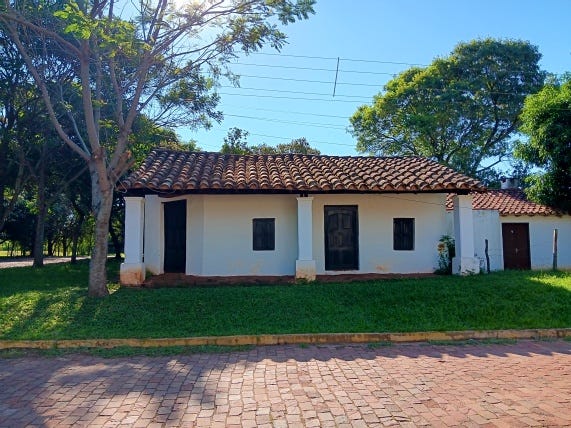
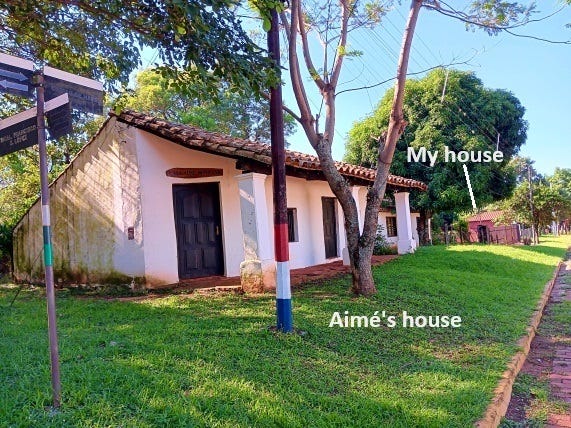
There’s an old house on the corner, a stone’s toss from mine. I finally realized whose it was.
I’d heard of Aimé Bonpland shortly after moving to the little old town of Santa María, Paraguay, last year. I even attended an event at the town’s Municipal Center in August, presided over by the French ambassador, to commemorate Aimé’s birthday. But ever since moving into my cottage on a silent street in Santa María’s historic center in October, I’d walked past the house over and over again without registering its significance. All I knew is no one lived there and that it was lovingly preserved; probably associated with the museum across the street.
But now I know that, oh my goodness, have I ever had a neighbor! What a cosmic honor, to live practically next door to each other—200 years apart!
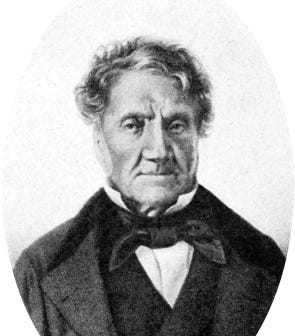
Amié Bonpland was born in La Rochelle, France (as were, incidentally, some of my ancestors), in 1773. By 1790 he relocated to Paris, where he was supposed to train in medicine—which he did—but his main passion became botany, which he studied with the greats of the day. This brought him into contact with Alexander von Humboldt, who he became partners with in their legendary, five-year exploration of South and Central America. They commenced in 1799, once the Napoleonic Wars let them.
Starting out in Caracas, Humboldt and Bonpland headed south to the banks of the Apure, a tributary of the Orinoco. During months spent in dense tropical jungle, they stayed healthy on ground cacao beans and river water, and proved a connection between the Orinoco and Amazon river systems. They didn’t get sick until they got back to civilization (funny how that works), where they rested up and headed briefly to Cuba before moving on to the Andes.
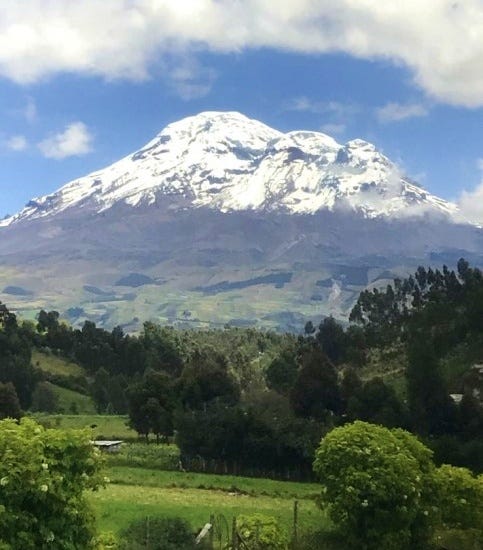
From Bogotá they walked all the way to Trujillo, Peru on mountain paths now more or less the route of the Pan American Highway. They climbed almost all of Chimborazo, the peak in Ecuador that sticks out farther from center of the Earth than Mount Everest, all the while studying everything under the sun and moon—plants, geodesy, meteorology, ocean currents, you name it. In the spring of 1803 they sailed to Acapulco, and spent a year in Mexico before swinging through Washington, DC for a meeting with President Jefferson before returning to France.
Aimé got back to Paris with over 6,000 plant specimens and more than a few tales to tell. Impressed, Napoleon gave him a pension, and Empress Joséphine put him in charge of her gardens at Chateau de Malmaison, where Aimé managed to stay put all the way until 1816, writing up and publishing his findings and cultivating his wild South American seeds. But by 1817 he was back in Buenos Aires.
He was supposed to be a professor of natural history there, but he soon left to explore and study. One species that particularly caught his attention was yerba mate. Aimé was probably one of the first to understand the true potential of a plant now central to the lives of millions upon millions of South Americans.
In 1821 Aimé started a colony at Santa Ana, about 100 miles as a bird flies from Santa María, with the express purpose of cultivating and selling yerba. This caught the ire of Paraguay’s founding dictator, José de Francia, who intended to monopolize this trade for himself. As such, Paraguayan forces expeditiously destroyed Santa Ana, which was then in territory disputed by Paraguay and Argentina, and Aimé was arrested as a “spy” and imprisoned.
So, after all that, after such an extraordinary life of adventures and intentions and efforts and achievements, there Aimé was: under house arrest at age 48 for stepping on a dictator’s toes.
But then there’s the matter of the house he was under arrest in.
It was in Santa Maria.
I’m here to tell you: that doesn’t suck.
Aimé went on to live next door to me for eight years. The terms of his arrest allowed him plenty of freedom, and he married, had kids, and became a revered member of the community, working as a physician while continuing his botanical passions. A couple years after being “released,” in 1831, he left Santa María. But he remained in the region for the rest of his life, never went back to Europe, and made a living in yerba and the orange trees he introduced. He died at the ripe old age of 84, among his orange groves near Santa Ana.
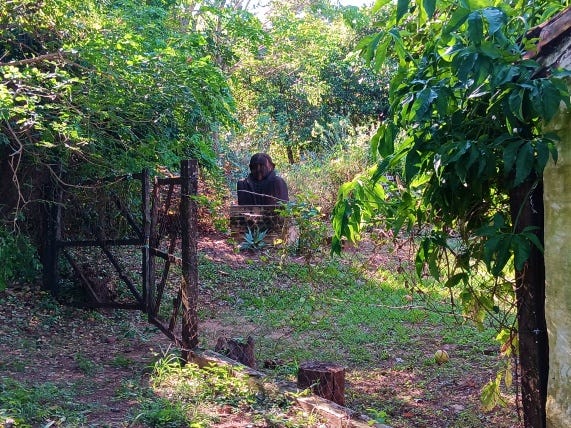
It is autumn now in Santa María. As I wander into the depths of my luscious back garden in the evening, I notice the bird and insect sounds have ebbed substantially from the cacophony they sang all summer. I also notice another development. As I look up into one of my four orange trees, I see the green balls of fruit have gotten bigger. And they are not all that green anymore. They are getting ripe! I wonder if the monkeys who live in the neighboring plaza know this, and will be visiting me soon.
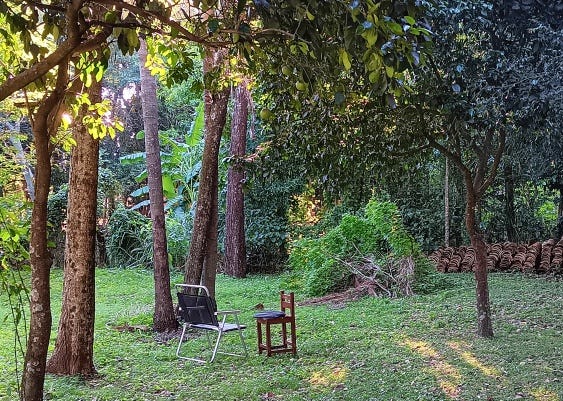
I reach up and pick a large, nearly-ripe one, and press it to the center of my chest. I smile.
Because I believe in my heart that this orange was brought here by my neighbor, Mr. Aimé Bonpland.